UI / UX Design
Points Simulator
An educational tool to clarify how users accumulate and redeem points, making the program’s value simple and tangible.
Year :
2023
Industry :
Bank
Client :
Livelo
Project Duration :
6 weeks
Project Overview
Livelo is the points program of Branco do Brasil and Bradesco where users can collect points in various ways. These include purchasing points, accumulating points through credit card usage, purchasing products on partner sites, subscribing to the club, and exchanging points for different types of products and services.
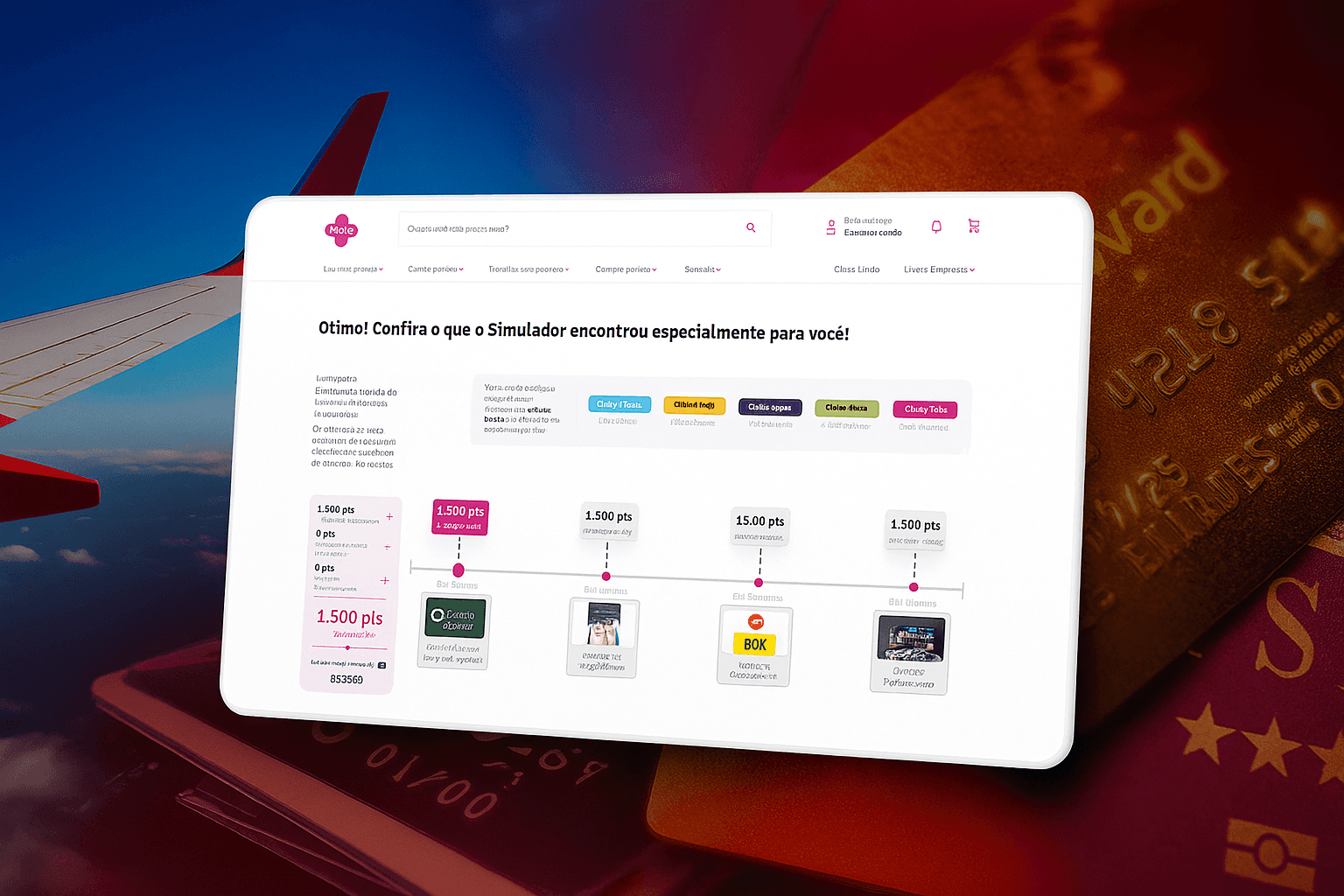
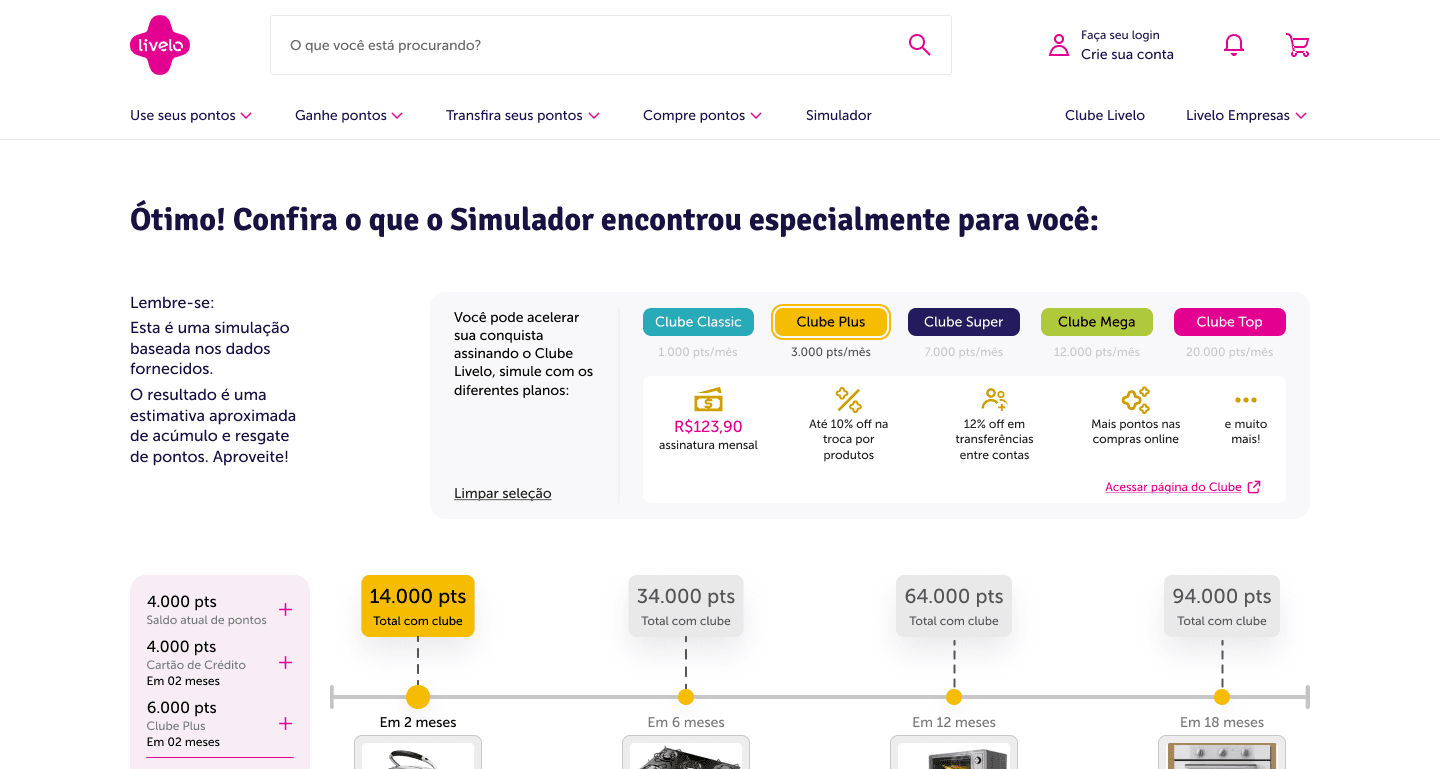
The Simulator is a tool designed to demonstrate the possibilities of accumulating and redeeming points in a more educational manner. Its purpose is to clarify and simplify the options offered by the Livelo program and how it functions.
Based on research, data, and insights gathered during the Discovery process, as well as through workshops, we entered the ideation stage to propose a feasible solution that highlights the value of the program for participants, both current and potential.
Through multiple studies, flow mapping, and wireframe development, we have created a prototype for testing. We would like to understand if participants would find this feature useful, if they like the design proposed by the product team, and if the information provided is clear for using its mechanism.
Initial research
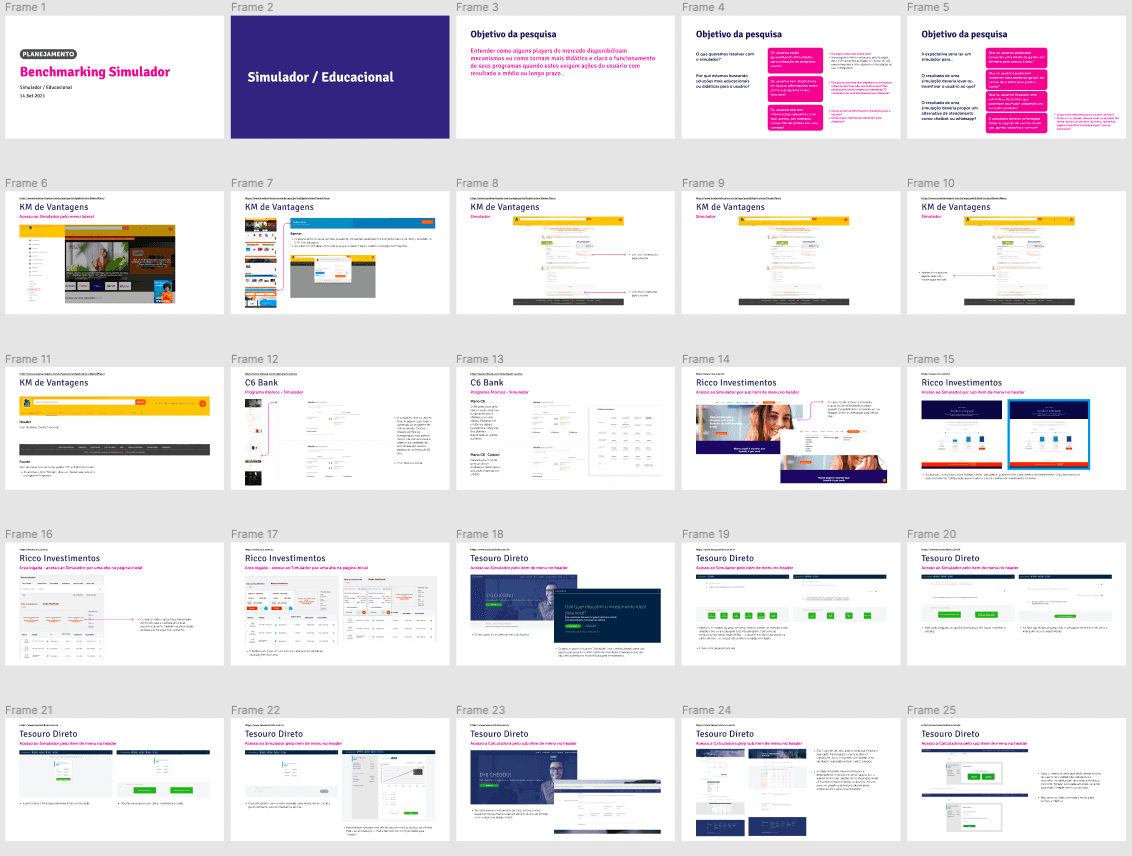
Gain an understanding of how certain market players provide mechanisms or enhance the clarity and didactic nature of their programs when user actions with medium or long-term outcomes are required.
Workshops and research
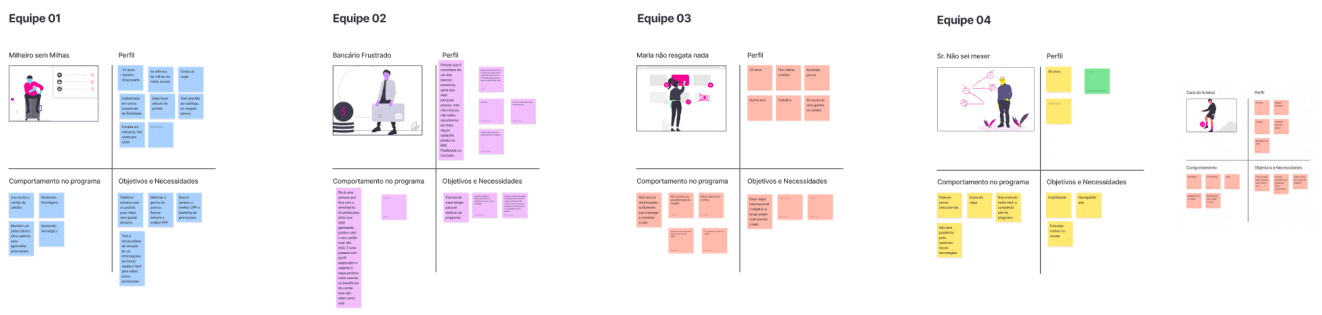
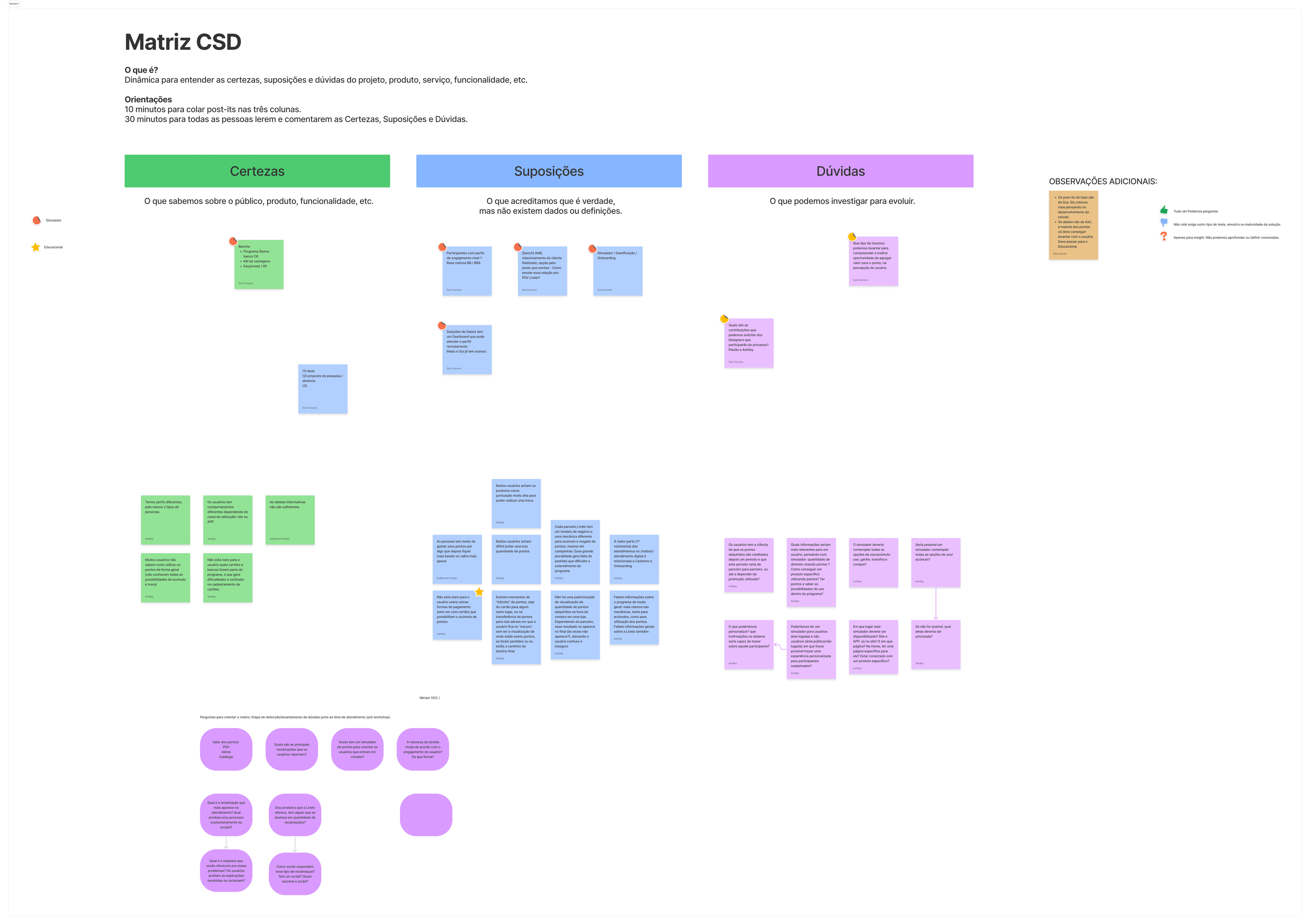
We have started hosting workshops with stakeholders to gain insights and develop a better understanding of our users.
Through these workshops, we have discovered valuable insights and patterns about our users and their goals. Additionally, we have learned how they use Livelo and what challenges they face when trying to find results using the tool.
Data survey
Gather the general data we have today to determine which types of devices are most commonly accessed and gain a better understanding of user profiles. Identify any indications of difficulty in any stage of the user journey, particularly during the initial stage of onboarding or when using a specific product.
What was discovered?
High complexity
Livelo is a program with many possibilities and variations, making its universe extensive and complex. This complexity poses challenges in creating a simulator that can cover all its nuances.
Freedom of choice
After a conversion is carried out, it is important for the participant to have a clear and objective path from point A to point B.
Simplification
Based on previous research, a simulation engine should be simple. It should not overwhelm users with too many steps or configurations at once. It is important to have a clear understanding of what the mechanism aims to achieve.
Clear goals
Most respondents believe that Livelo participants access the channels with a specific goal in mind, even if that goal is initially to gain a better understanding of the program and how it works.
PROTOTYPE
Flow
After completing the data collection and conducting internal and external interviews, it became necessary to create a flowchart. This flowchart served as a clear representation of the desired approach for the Simulator. It proved to be invaluable in guiding the production of the product and visually communicating our goals.
Design
According to the research results and technical feasibility, we implemented the entire point simulation flow and how the result would be displayed to the user with the intention of promoting the products and services provided. With that, we developed prototypes for Desktop and Web Mobile (APP was not contemplated in this first version) which was applied in tests for the user in search of improvements for the final version of release.
User testing
We structured the test evaluation into two distinct categories, employing the following methodology:
Online Test 1:1 with Real Users, Featuring a High-Fidelity Navigable Prototype
Development of a detailed script and specific prototypes for the test:
Conducting pilot tests for adherence and refining the script.
Defining five tasks for users to perform within a controlled scenario.
Journey Evaluation
Assessing whether the term "Simulator" resonates with the participant. If not, soliciting alternative suggestions;
Determining if the categories displayed on the first page suffice, or if there are additional categories that we may have overlooked.
Usability Assessment
Investigating whether participants would instinctively search for the simulator in the header;
On the results page, gauging participants' comprehension of the ability to click on tags and simulate scores with other clubs. Evaluating the clarity and ease of this interaction;
Scrutinizing the font size to ascertain whether it facilitates easy reading or if it appears too small (both in the results section and in the club listings).
More Projects

UI / UX Design
Points Simulator
An educational tool to clarify how users accumulate and redeem points, making the program’s value simple and tangible.
Year :
2023
Industry :
Bank
Client :
Livelo
Project Duration :
6 weeks
Project Overview
Livelo is the points program of Branco do Brasil and Bradesco where users can collect points in various ways. These include purchasing points, accumulating points through credit card usage, purchasing products on partner sites, subscribing to the club, and exchanging points for different types of products and services.
The Simulator is a tool designed to demonstrate the possibilities of accumulating and redeeming points in a more educational manner. Its purpose is to clarify and simplify the options offered by the Livelo program and how it functions.
Based on research, data, and insights gathered during the Discovery process, as well as through workshops, we entered the ideation stage to propose a feasible solution that highlights the value of the program for participants, both current and potential.
Through multiple studies, flow mapping, and wireframe development, we have created a prototype for testing. We would like to understand if participants would find this feature useful, if they like the design proposed by the product team, and if the information provided is clear for using its mechanism.
Initial research
Gain an understanding of how certain market players provide mechanisms or enhance the clarity and didactic nature of their programs when user actions with medium or long-term outcomes are required.
Workshops and research
We have started hosting workshops with stakeholders to gain insights and develop a better understanding of our users.
Through these workshops, we have discovered valuable insights and patterns about our users and their goals. Additionally, we have learned how they use Livelo and what challenges they face when trying to find results using the tool.
Data survey
Gather the general data we have today to determine which types of devices are most commonly accessed and gain a better understanding of user profiles. Identify any indications of difficulty in any stage of the user journey, particularly during the initial stage of onboarding or when using a specific product.
What was discovered?
High complexity
Livelo is a program with many possibilities and variations, making its universe extensive and complex. This complexity poses challenges in creating a simulator that can cover all its nuances.
Freedom of choice
After a conversion is carried out, it is important for the participant to have a clear and objective path from point A to point B.
Simplification
Based on previous research, a simulation engine should be simple. It should not overwhelm users with too many steps or configurations at once. It is important to have a clear understanding of what the mechanism aims to achieve.
Clear goals
Most respondents believe that Livelo participants access the channels with a specific goal in mind, even if that goal is initially to gain a better understanding of the program and how it works.
PROTOTYPE
Flow
After completing the data collection and conducting internal and external interviews, it became necessary to create a flowchart. This flowchart served as a clear representation of the desired approach for the Simulator. It proved to be invaluable in guiding the production of the product and visually communicating our goals.
Design
According to the research results and technical feasibility, we implemented the entire point simulation flow and how the result would be displayed to the user with the intention of promoting the products and services provided. With that, we developed prototypes for Desktop and Web Mobile (APP was not contemplated in this first version) which was applied in tests for the user in search of improvements for the final version of release.
User testing
We structured the test evaluation into two distinct categories, employing the following methodology:
Online Test 1:1 with Real Users, Featuring a High-Fidelity Navigable Prototype
Development of a detailed script and specific prototypes for the test:
Conducting pilot tests for adherence and refining the script.
Defining five tasks for users to perform within a controlled scenario.
Journey Evaluation
Assessing whether the term "Simulator" resonates with the participant. If not, soliciting alternative suggestions;
Determining if the categories displayed on the first page suffice, or if there are additional categories that we may have overlooked.
Usability Assessment
Investigating whether participants would instinctively search for the simulator in the header;
On the results page, gauging participants' comprehension of the ability to click on tags and simulate scores with other clubs. Evaluating the clarity and ease of this interaction;
Scrutinizing the font size to ascertain whether it facilitates easy reading or if it appears too small (both in the results section and in the club listings).
More Projects
UI / UX Design
Points Simulator
An educational tool to clarify how users accumulate and redeem points, making the program’s value simple and tangible.
Year :
2023
Industry :
Bank
Client :
Livelo
Project Duration :
6 weeks
Project Overview
Livelo is the points program of Branco do Brasil and Bradesco where users can collect points in various ways. These include purchasing points, accumulating points through credit card usage, purchasing products on partner sites, subscribing to the club, and exchanging points for different types of products and services.
The Simulator is a tool designed to demonstrate the possibilities of accumulating and redeeming points in a more educational manner. Its purpose is to clarify and simplify the options offered by the Livelo program and how it functions.
Based on research, data, and insights gathered during the Discovery process, as well as through workshops, we entered the ideation stage to propose a feasible solution that highlights the value of the program for participants, both current and potential.
Through multiple studies, flow mapping, and wireframe development, we have created a prototype for testing. We would like to understand if participants would find this feature useful, if they like the design proposed by the product team, and if the information provided is clear for using its mechanism.
Initial research
Gain an understanding of how certain market players provide mechanisms or enhance the clarity and didactic nature of their programs when user actions with medium or long-term outcomes are required.
Workshops and research
We have started hosting workshops with stakeholders to gain insights and develop a better understanding of our users.
Through these workshops, we have discovered valuable insights and patterns about our users and their goals. Additionally, we have learned how they use Livelo and what challenges they face when trying to find results using the tool.
Data survey
Gather the general data we have today to determine which types of devices are most commonly accessed and gain a better understanding of user profiles. Identify any indications of difficulty in any stage of the user journey, particularly during the initial stage of onboarding or when using a specific product.
What was discovered?
High complexity
Livelo is a program with many possibilities and variations, making its universe extensive and complex. This complexity poses challenges in creating a simulator that can cover all its nuances.
Freedom of choice
After a conversion is carried out, it is important for the participant to have a clear and objective path from point A to point B.
Simplification
Based on previous research, a simulation engine should be simple. It should not overwhelm users with too many steps or configurations at once. It is important to have a clear understanding of what the mechanism aims to achieve.
Clear goals
Most respondents believe that Livelo participants access the channels with a specific goal in mind, even if that goal is initially to gain a better understanding of the program and how it works.
PROTOTYPE
Flow
After completing the data collection and conducting internal and external interviews, it became necessary to create a flowchart. This flowchart served as a clear representation of the desired approach for the Simulator. It proved to be invaluable in guiding the production of the product and visually communicating our goals.
Design
According to the research results and technical feasibility, we implemented the entire point simulation flow and how the result would be displayed to the user with the intention of promoting the products and services provided. With that, we developed prototypes for Desktop and Web Mobile (APP was not contemplated in this first version) which was applied in tests for the user in search of improvements for the final version of release.
User testing
We structured the test evaluation into two distinct categories, employing the following methodology:
Online Test 1:1 with Real Users, Featuring a High-Fidelity Navigable Prototype
Development of a detailed script and specific prototypes for the test:
Conducting pilot tests for adherence and refining the script.
Defining five tasks for users to perform within a controlled scenario.
Journey Evaluation
Assessing whether the term "Simulator" resonates with the participant. If not, soliciting alternative suggestions;
Determining if the categories displayed on the first page suffice, or if there are additional categories that we may have overlooked.
Usability Assessment
Investigating whether participants would instinctively search for the simulator in the header;
On the results page, gauging participants' comprehension of the ability to click on tags and simulate scores with other clubs. Evaluating the clarity and ease of this interaction;
Scrutinizing the font size to ascertain whether it facilitates easy reading or if it appears too small (both in the results section and in the club listings).